
Tcg onchain 2026 limits to account for
The on-chain trading card game market has reached an $80 billion valuation, driven by the digital integration of major titles like Pokémon and Magic: The Gathering. However, this growth is currently constrained by a heavy reliance on secondary channels. Over 50% of price discovery occurs in gray markets, where liquidity is fragmented and transparent settlement is rare. This disconnect between physical card value and digital ownership creates friction for collectors seeking real-time, on-chain liquidity.
The shift toward tokenization is gaining traction, with large financial firms exploring real-world assets (RWAs) as part of broader Web3 strategies. At events like the Hong Kong Web3 Festival 2026, discussions highlighted how banks and asset managers are testing tokenized card ownership. Yet, for the average player, the primary constraint remains the gap between traditional TCG ecosystems and on-chain settlement layers. Without standardized protocols, true real-time settlement remains an aspirational goal rather than a current reality.
Tcg onchain 2026 choices that change the plan
Moving physical trading card games on-chain in 2026 isn't just a tech upgrade; it's a fundamental shift in how value is stored and transferred. While the promise of instant settlement and global liquidity is real, the transition introduces friction points that traditional collectors and investors must weigh carefully. The on-chain TCG market, now valued at roughly $80 billion, is expanding rapidly, with major titles like Pokémon and Magic: The Gathering driving adoption. However, the mechanics of tokenization bring specific advantages and disadvantages that vary by game and platform.
Liquidity vs. Physical Scarcity
The most significant tradeoff in 2026 is the balance between immediate liquidity and the tangible scarcity of physical cards. On-chain assets allow for near-instant trading across global markets, eliminating the shipping delays and auction wait times of traditional platforms. This efficiency is particularly attractive for high-volume traders and speculators. However, it comes at the cost of the "tangibility premium." Physical cards offer a sensory experience and a sense of ownership that digital tokens often lack. For many collectors, the ability to hold a card in hand is part of the value proposition, a factor that on-chain platforms struggle to replicate.
Transparency vs. Market Opacity
On-chain transactions are recorded on a public ledger, offering unprecedented transparency in price discovery and ownership history. This reduces the risk of fraud and counterfeit cards, which have long plagued the physical TCG market. However, this same transparency can lead to front-running and predatory trading practices, where large players can see pending trades and manipulate prices. Additionally, over 50% of price discovery in the current on-chain TCG market still occurs in gray markets, where regulatory oversight is minimal. This creates a complex environment where transparency does not always equate to fairness or stability.
Accessibility vs. Technical Barrier
Tokenized TCGs lower the barrier to entry for global participation, allowing anyone with a wallet to trade without geographic restrictions. This democratization of access is a key driver of the market's growth. However, it also introduces a steep technical learning curve. Users must manage private keys, understand gas fees, and navigate various blockchain protocols, which can be intimidating for casual players. The risk of losing access to assets due to lost keys or platform errors is a real concern that physical card owners do not face.
Market Impact and Volatility
The integration of traditional finance and blockchain technology is reshaping the TCG landscape. Large financial firms are exploring tokenized assets, and banks are testing blockchain solutions for asset management. This institutional interest brings capital and legitimacy but also increases volatility. On-chain TCG prices are often more volatile than their physical counterparts, driven by crypto market trends and speculative trading. Investors must be prepared for rapid price swings and understand the underlying technological risks.
| Factor | On-Chain | Physical | Key Tradeoff |
|---|---|---|---|
| Liquidity | Instant, global settlement | Slow, auction-based | Speed vs. Tangibility |
| Transparency | Public ledger, auditable | Private, opaque | Trust vs. Privacy |
| Accessibility | Global, low barrier | Local, high barrier | Reach vs. Complexity |
| Volatility | High, crypto-linked | Moderate, collector-driven | Growth vs. Stability |
| Ownership | Digital token, smart contract | Physical card, possession | Utility vs. Sentiment |
The decision to participate in the on-chain TCG market in 2026 depends on your priorities. If you value speed, transparency, and global access, on-chain platforms offer compelling benefits. However, if you prioritize tangibility, privacy, and stability, physical cards remain a strong choice. Understanding these tradeoffs is essential for making informed decisions in this evolving market.
How to pick the right TCG in 2026
The on-chain TCG market has reached an $80 billion valuation, driven by the integration of Pokémon and Magic: The Gathering with real-time blockchain settlement. This shift means liquidity is now instant, but it also requires a new way to evaluate products. You are no longer just buying a card; you are acquiring a tokenized asset with immediate tradability.
To navigate this landscape, follow this practical decision framework.
Start by identifying the specific 2026 release you want. For Pokémon, the next main expansion is Pitch Black (ME05), releasing July 17, 2026. If you are looking for immediate availability, the Pokémon Day 2026 Collection is the current product on the market. Ensure the set you choose has established on-chain liquidity to avoid getting stuck with illiquid assets.
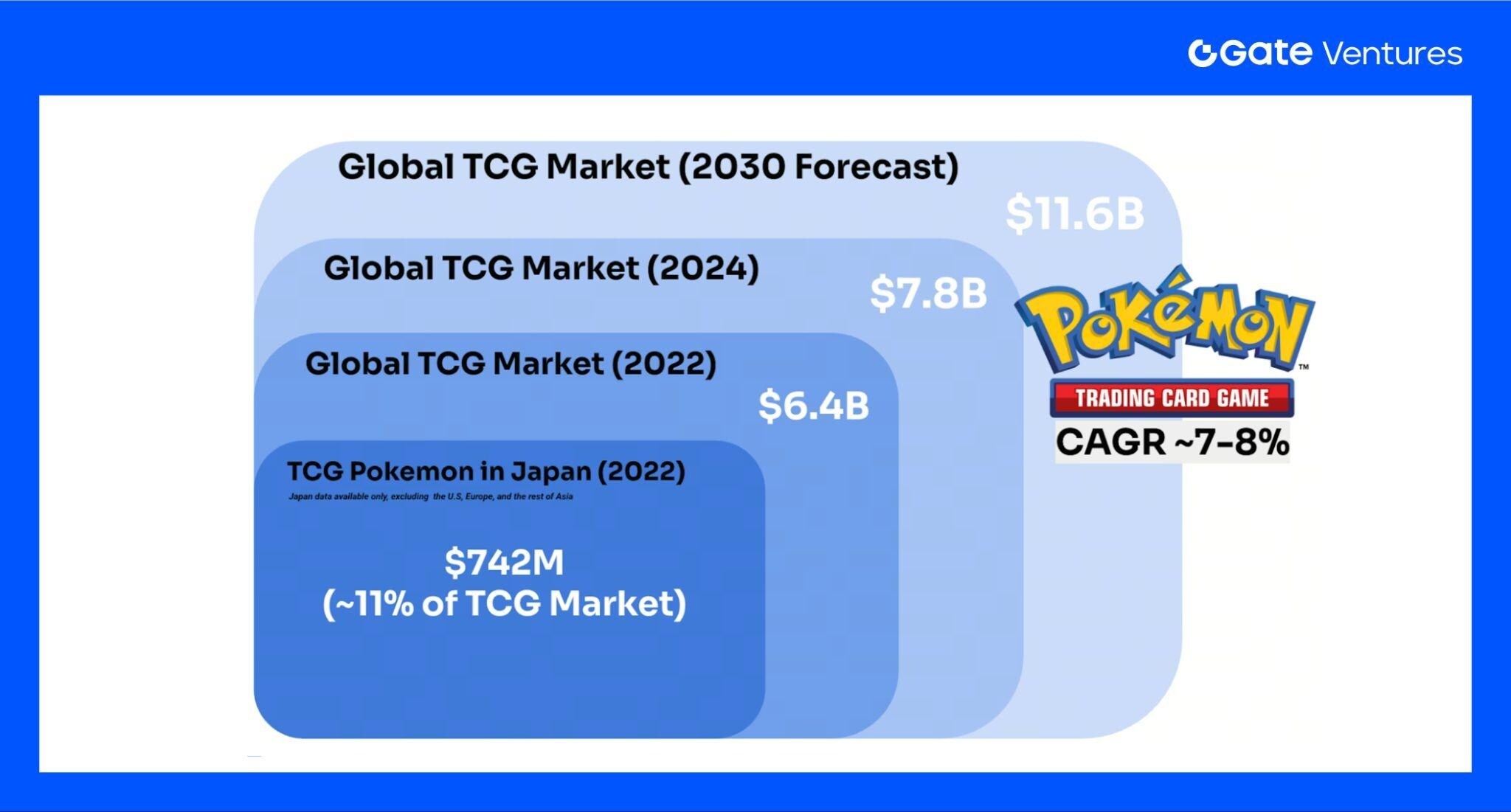
The leading TCGs for 2026 are Riftbound (League of Legends), Digimon, Pokémon, Yu-Gi-Oh!, and Magic: The Gathering. Use a ComparisonTable to weigh their on-chain features. Pokémon offers the highest volume, while Riftbound brings a new IP with strong digital-native community support. Choose based on whether you prioritize established liquidity or emerging ecosystem growth.
Over 50% of price discovery for on-chain TCGs now occurs in gray markets. Do not rely on static MSRP. Use the TechnicalChart widget to monitor live trading volume and price trends. This helps you distinguish between hype-driven spikes and sustainable value, ensuring you enter the market at a rational price point.
| TCG | On-Chain Liquidity | Best For |
|---|---|---|
| Pokémon TCG | High | Established value |
| Riftbound | Medium | New IP growth |
| Magic: The Gathering | High | Collector depth |
Spotting Weak Options in the On-Chain TCG Space
The on-chain TCG market has expanded rapidly, now valued at roughly $80 billion, with major influences from Pokémon and Magic: The Gathering. However, this growth brings a surge in misleading claims and weak product options. Over 50% of price discovery still occurs in gray markets, making it harder for new investors to verify the true value of digital assets. Many projects promise real-time settlement but lack the liquidity or transparent backing to support those claims.
When evaluating on-chain TCGs, look for concrete evidence of real-world asset (RWA) integration. Large financial firms are currently exploring tokenized assets, signaling a shift toward more regulated and transparent models. Avoid projects that rely solely on speculative hype without clear utility or official partnerships. The distinction between a genuine digital collectible and a speculative token is critical for long-term value.
For physical TCG players, the 2026 landscape remains dominated by established titles. Riftbound, Digimon, Pokémon, Yu-Gi-Oh!, and Magic: The Gathering remain the top choices for new players. If you are looking to start, Pokémon remains a strong contender with upcoming sets like Pitch Black releasing in July 2026. The Pokémon Day 2026 Collection is another notable product, featuring a foil Pikachu promo and booster packs.
Always verify the source of any on-chain TCG claim. Official sources and primary research provide the most reliable data. Be wary of projects that do not disclose their tokenomics or settlement mechanisms. The market is evolving, but transparency remains the key to identifying strong opportunities versus weak options.
No comments yet. Be the first to share your thoughts!