
The $80 billion on-chain TCG market
The traditional physical trading card game (TCG) market, anchored by giants like Pokémon and Magic: The Gathering, has long been valued at approximately $15 billion. While this figure represents decades of established hobbyist engagement, it captures only a fraction of the current economic reality. The on-chain TCG market is now estimated at $80 billion, a valuation that reflects not just the digitization of physical assets, but the emergence of a parallel, highly liquid financial ecosystem.
This disparity in valuation highlights a fundamental shift in price discovery mechanisms. In the physical world, liquidity is constrained by storage, authentication, and geographic fragmentation. On-chain, these frictions are removed, allowing for continuous global trading. However, this efficiency comes with volatility. Over 50% of price discovery for these assets now occurs in gray markets, where speculative trading often outpaces genuine gameplay utility.
The growth of this sector is driven by the tokenization of high-value physical cards and the creation of native digital cards. As capital flows into these digital representations, the distinction between "collectible" and "financial asset" blurs. For investors and players alike, understanding this $80 billion landscape requires looking beyond the hype to the underlying mechanics of ownership and liquidity that define the next generation of digital card marketplaces.
Real ownership replaces centralized servers
The transition to blockchain-based trading card games (TCGs) marks a structural shift from licensed digital goods to verifiable property. In traditional centralized models, players rent access to assets that exist solely on private servers. If a platform shuts down or alters its terms, the collection vanishes. On-chain TCGs replace this dependency with cryptographic proof. Players must demonstrate ownership of specific tokens to participate, ensuring that the card’s existence is independent of any single corporate entity.
This mechanism fundamentally alters the value proposition of digital collectibles. Instead of relying on a company’s promise to uphold an item’s rarity, the ledger provides an immutable record of provenance. The asset becomes portable, tradeable, and usable across compatible environments. This utility drives the market, as seen in the broader adoption of blockchain gaming assets, which continues to mature eight years after the initial wave of NFT experiments.
The requirement to prove on-chain ownership introduces a new layer of economic security. It prevents the inflationary practices common in closed-loop systems where developers can mint unlimited copies of rare cards. By tying gameplay access to actual token possession, the ecosystem aligns incentives between players, collectors, and developers. The result is a marketplace where value is determined by scarcity and demand, not by administrative decree.
Leading blockchain TCG projects in 2026
The blockchain TCG landscape in 2026 has shifted from speculative asset trading to genuine gameplay ecosystems. Projects are now evaluated on mechanical depth, tokenomics stability, and chain efficiency rather than mere mint volume. This section compares the most mature platforms currently driving this transition.
The following table contrasts the primary architectural and economic differences between the leading contenders. These metrics reflect current operational models rather than historical speculation.
| Project | Gameplay Focus | Primary Chain | Economic Model |
|---|---|---|---|
| Parallel TCG | Competitive deck-building | Base / Ethereum | Dual-token (Parallel + PX) |
| Gods Unchained | Traditional TCG mechanics | Immutable X | Single token (GODS) |
| Splinterlands | Auto-battler hybrid | Hive / WAX | |
| Skyweaver | Cross-chain trading | Polygon / Ethereum | No native token |
Parallel TCG represents the high-end segment of the market, leveraging the Base network for low-latency interactions while maintaining Ethereum security for high-value assets. Its dual-token system separates gameplay currency from governance, a structure designed to insulate the economy from speculative volatility. Gods Unchained, operating on Immutable X, offers the most accessible entry point, prioritizing familiar TCG mechanics over complex crypto-integration. Skyweaver distinguishes itself by enabling true cross-chain asset portability, allowing players to move cards between Polygon and Ethereum without centralized intermediaries.
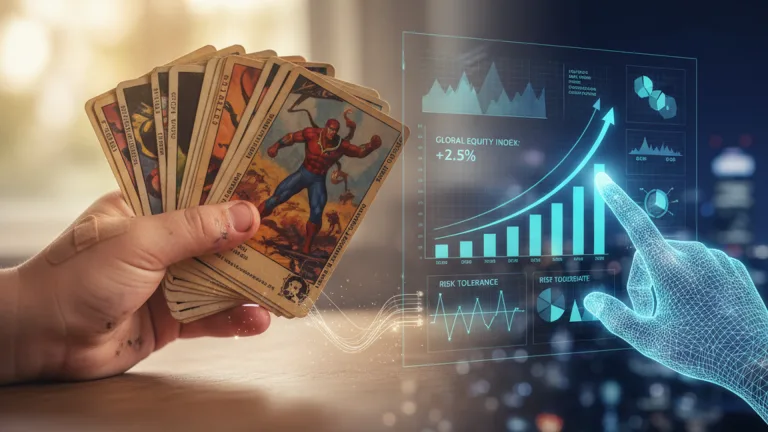
The economic models vary significantly. Projects like Splinterlands use a single-token approach for simplicity, while Parallel’s dual-token system attempts to balance play-to-earn incentives with long-term sustainability. Skyweaver’s lack of a native token reflects a different philosophy: focusing entirely on card utility and trading rather than token speculation. This shift toward utility-first design is the defining characteristic of the 2026 market.
Tokenizing Physical Card Giants
The convergence of legacy intellectual property with blockchain infrastructure marks a structural shift in the digital collectibles market. The physical trading card game industry, valued at approximately $15 billion, is no longer competing with on-chain alternatives but rather integrating with them. This migration allows high-value assets from franchises like Pokémon, Magic: The Gathering, and Yu-Gi-Oh to transition from static storage to liquid, verifiable on-chain instruments.
The primary mechanism driving this adoption is the adaptation of physical card mechanics to on-chain trading protocols. Unlike speculative generative art projects, these tokens represent real-world utility and gameplay. The introduction of official restricted and banned lists, such as the February 2, 2026, update for Yu-Gi-Oh, demonstrates that traditional tournament integrity rules are being mapped onto digital ledgers. This ensures that on-chain gameplay remains subject to the same strategic constraints as physical play, preserving the asset's intrinsic value.
This integration transforms the collector base. By tokenizing physical cards, platforms enable fractional ownership and instant settlement, removing the friction of authentication and shipping inherent in the secondary market. The result is a unified liquidity pool where the scarcity of a physical graded card is mirrored by its on-chain counterpart, creating a more efficient price discovery mechanism for high-stakes assets.
Market Trends and Liquidity Shifts
The on-chain TCG market has reached an $80 billion valuation, driven by the integration of major IPs like Pokémon and Magic: The Gathering. This scale signals a transition from speculative novelty to a mature financial asset class, where genuine gameplay utility anchors market value.
Liquidity dynamics have shifted as price discovery moves on-chain. Historically, over 50% of trading occurred in opaque gray markets. Now, transparent ledger data allows participants to track liquidity flows in real time, reducing information asymmetry and stabilizing asset prices.

Market volatility remains a factor, but the underlying trend favors structural growth. As more players engage with tradable digital assets, the depth of the market increases, allowing for more efficient capital allocation and sustained interest beyond initial hype cycles.
No comments yet. Be the first to share your thoughts!